

Intern Perspective: Understanding the Campus Closet Through Amoobi
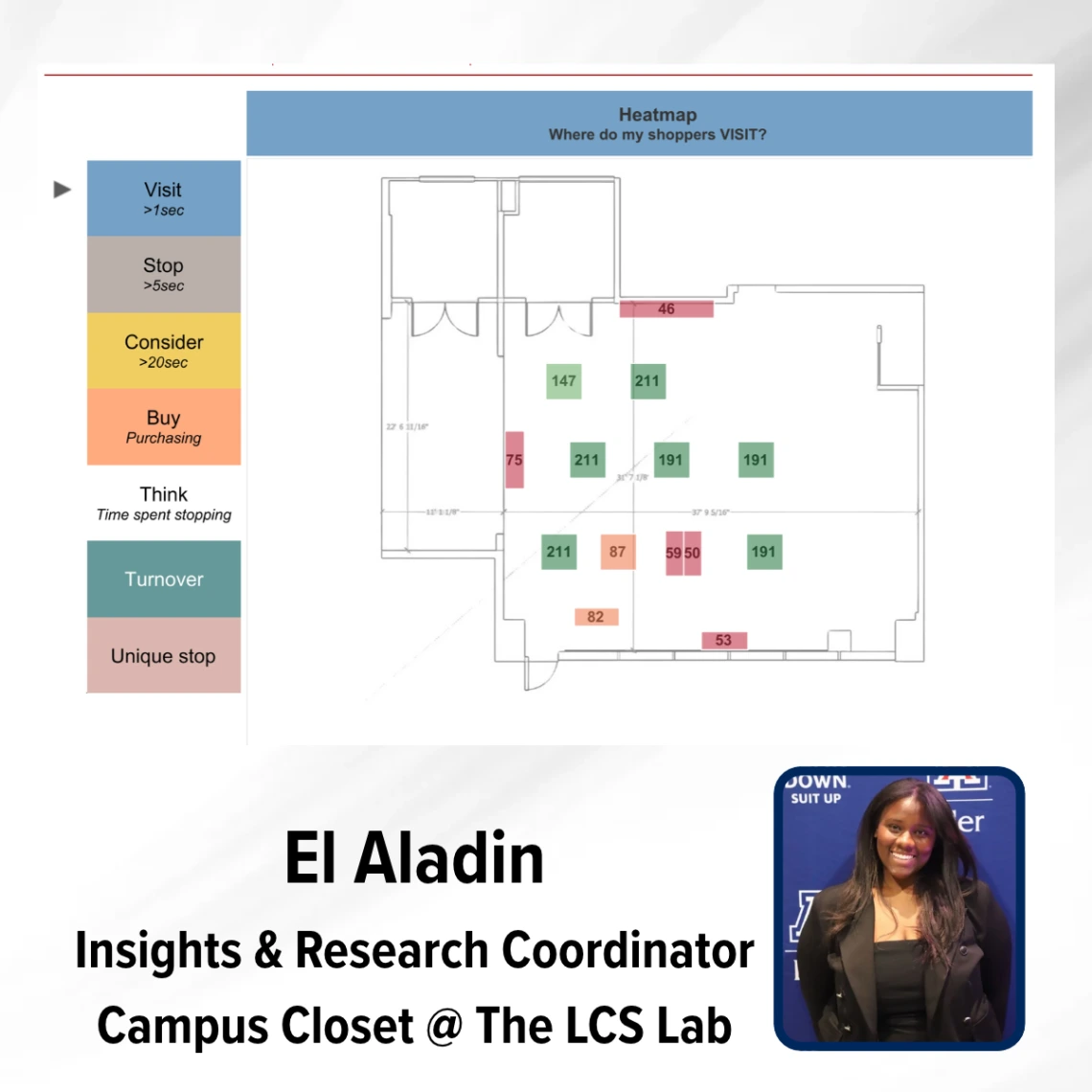
El created this map of the LCS Lab to track consumer movement and behavior based on Amoobi heat map software.
As the analytics intern at the lab, I’ve been using Amoobi to track how visitors move through our store. With our 3D sensors, I can follow where people go from the moment they walk in to the moment they check out. After building a planogram of the store, I started getting real-time analytics on how long each visitor spends at our racks and displays.
One feature I use a lot is adjacencies, which shows which racks complement each other. For example, I can see what percentage of people go from the sunglasses to checkout compared to how many go from the sunglasses over to the dress racks. That kind of information helps our team make an informed decision on where and if we should consider adjusting the layout of the store and what should be placed next to what.
I can also see how many visitors stopped at each rack during any timeframe I set, what percentage of all visitors that is, and how long they stayed. It also flags unique stops, which are visits where that rack was the only thing someone stopped at during their trip.
Another feature breaks down whether visitors just visit a rack, actually stop, or take time to consider it, based on how long they stand there. Zones of interest show how many people cross certain areas and where they head next, so I can see which direction people go after the entrance and what percentage take each path.
Amoobi also lets us compare overall visitor traffic across months, how long people tend to spend in the store, and what percentage of them visit multiple areas. All of that can be broken down for each individual rack. And because the sensors track movement rather than faces, every visitor stays anonymous which is essential to campus closet.
It’s been really interesting to see how much product placement can change the way and how much people shop. I’m grateful for the chance to work with this data and I’m looking forward to learning more.